

News


Time:2026-10-27 14:06:14
Mainline 1: AI hubs issue commands to existing home appliances, and the value of the receiver’s “stable demodulation” is being reassessed
Industry developments:
In 2026, smart hubs such as ZTE’s AI smart display are beginning to use 360° infrared emitter modules to let voice assistants directly control traditional home appliances such as air conditioners, fans, and TVs. Infrared has gone from being a “legacy technology to be replaced” to the execution endpoint through which AI hubs issue commands to a massive installed base of existing home appliances.
Engineering pain point:
When control commands are sent by AI and relayed by an emitter module, if the receiving end experiences occasional code loss due to power supply fluctuations or ambient light interference, users will not perceive it as “the remote control is not working.” Instead, they will directly complain that “this AI is not easy to use.”
XINGLIGHT selection solution:
To ensure that AI commands land reliably, the receiver must have extremely strong anti-interference and wide-voltage adaptability.
Wide voltage and anti-interference:
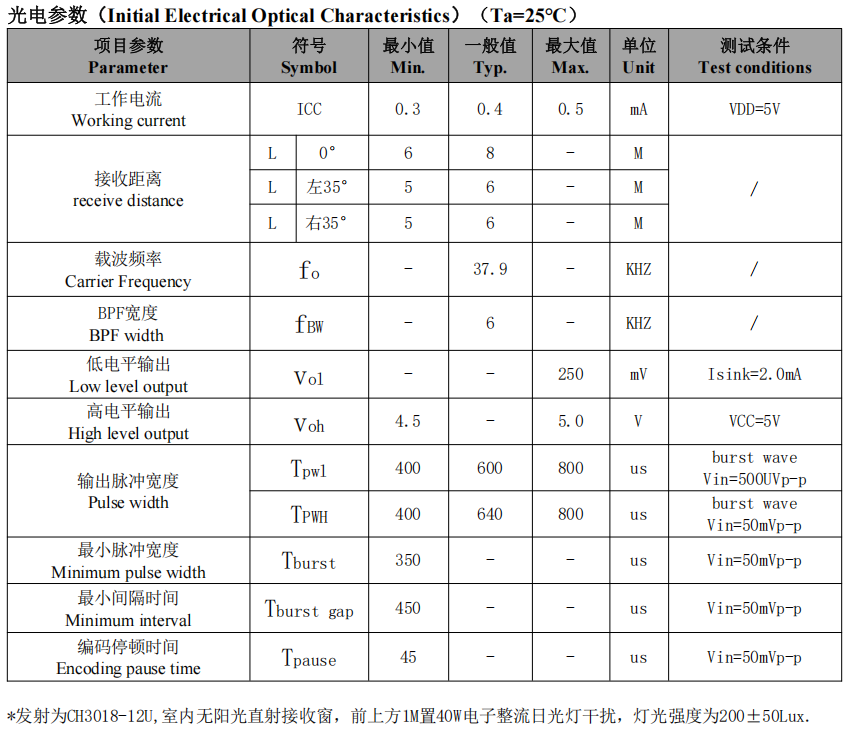
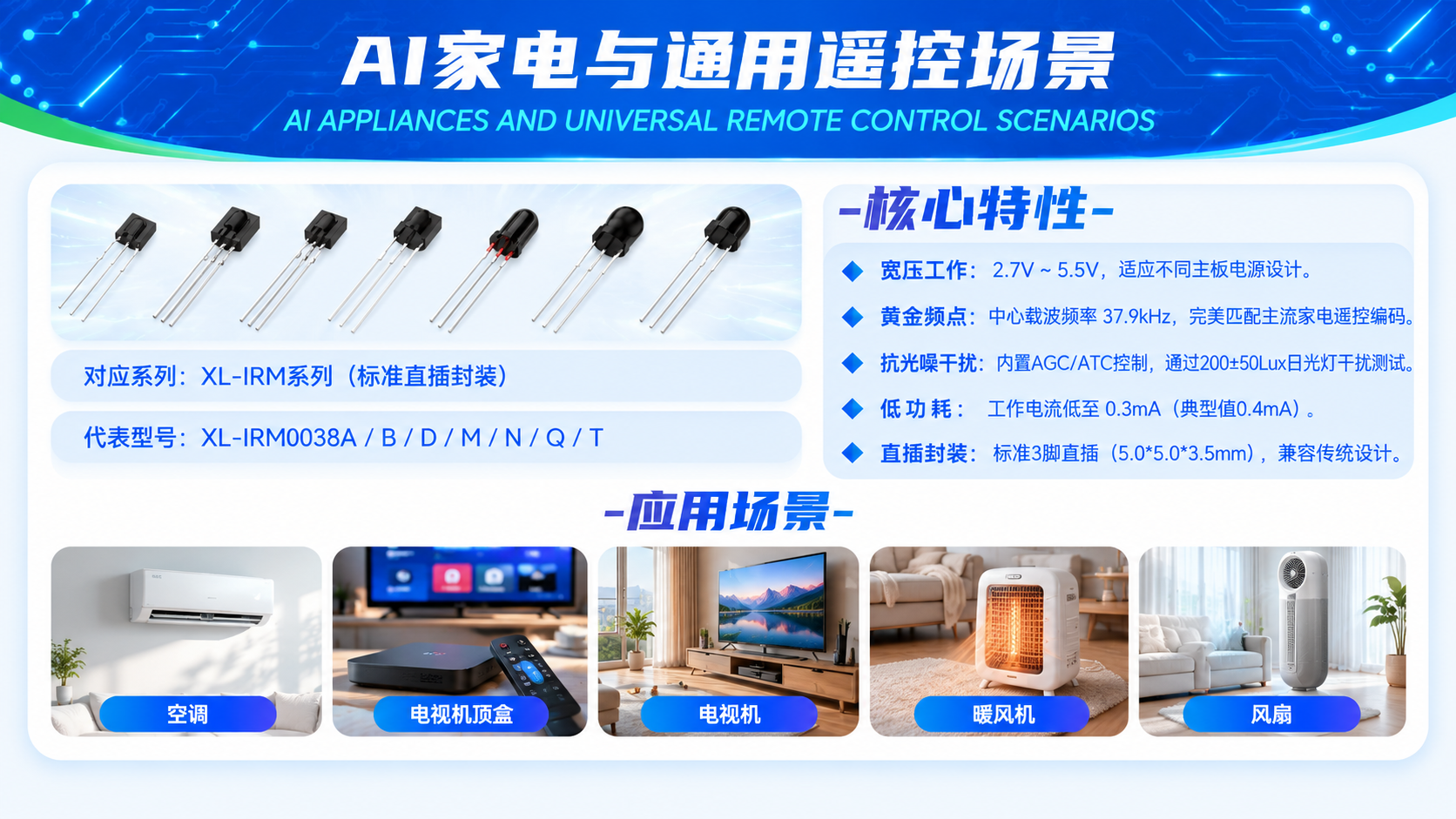
Most models in XINGLIGHT’s XL-IRM series have a recommended operating voltage of 2.7 V to 5.5 V and feature built-in AGC (Automatic Gain Control) and ATC (Automatic Threshold Control), enabling stable operation under complex power-supply conditions.
Light-noise immunity:
The product documentation explicitly specifies stringent test conditions—with no direct sunlight on the receiver window indoors, a 40 W electronically ballasted fluorescent lamp placed 1 m in front and above as interference, and a light intensity of 200 ± 50 Lux, stable reception is still guaranteed.
Mainline 2: From “one part for all” to “scenario-based customization”—the selection logic for remote-control encoding needs updating
Industry developments:
In 2026, the industry is seeing a trend toward “broadband universalization of a single device” (such as the wideband receivers launched by Vishay), attempting to cover all remote-control encodings with one device to reduce BOM maintenance costs for OEMs.
XINGLIGHT’s “reverse” engineering solution:
Universalization is certainly a trend, but in practical applications, “model differentiation” tailored to specific scenarios often delivers better cost-effectiveness and stability. Take the continuous-code scenario in the datasheet as an example:
Specialized for continuous codes:
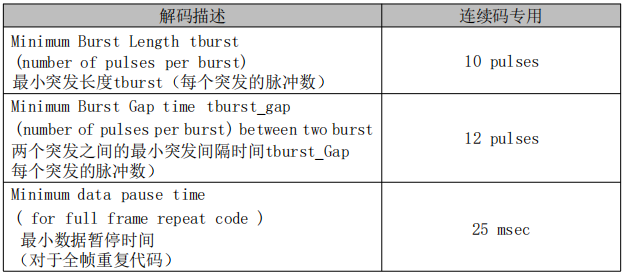
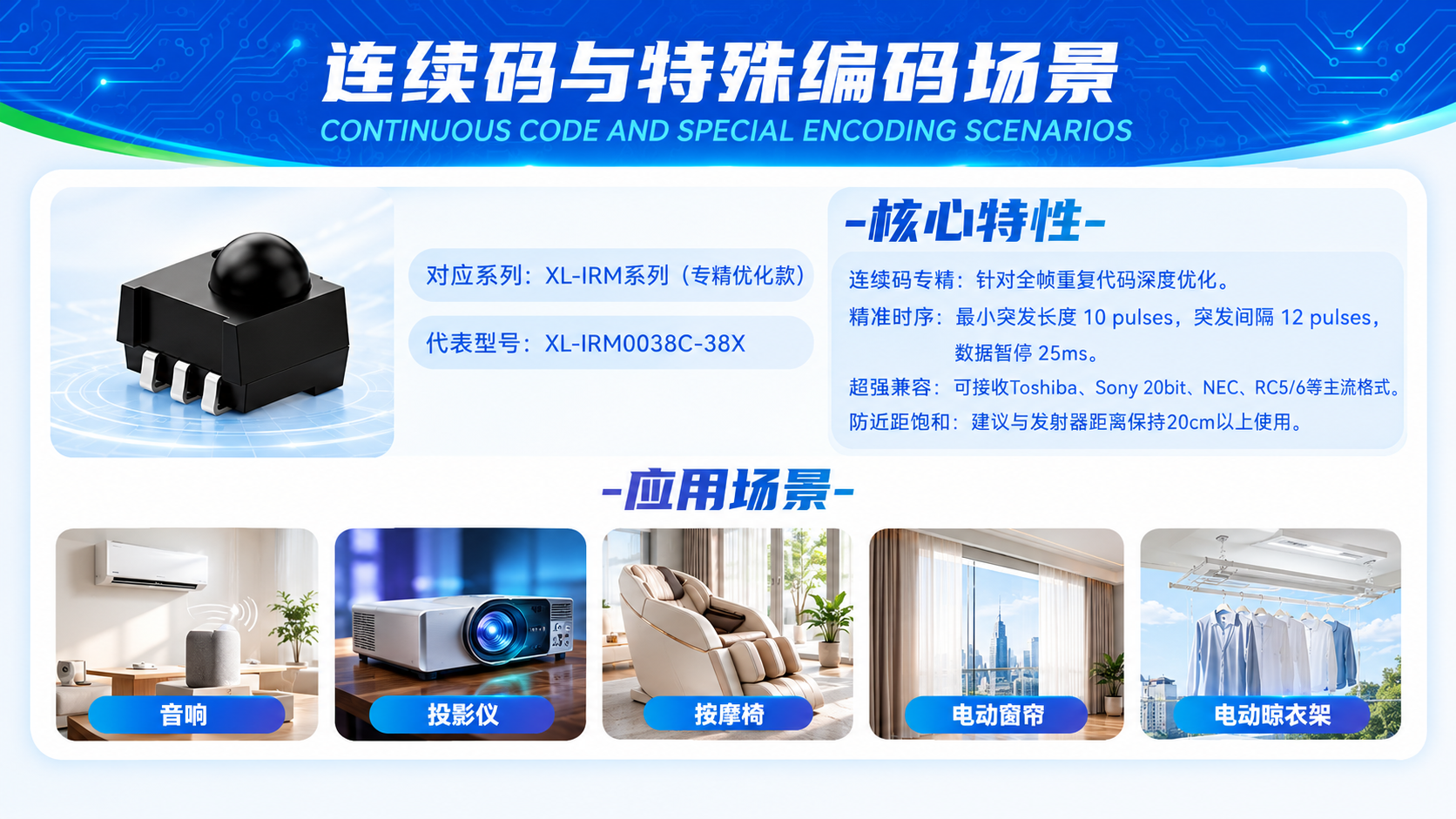
For scenarios that require continuous command transmission, the XL-IRM0038C-38X has been deeply optimized. The datasheet explicitly states that its minimum burst length is 10 pulses, its burst interval is 12 pulses, and its data pause is 25 ms. Its list of receivable codes covers mainstream formats such as Toshiba, Sony 20-bit, NEC, and RC5/6.
Standard home-appliance remote control:
For ordinary home appliances, models such as the XL-IRM0038B/C land precisely on the golden carrier frequency of 37.9 kHz and, with a 6 kHz BPF bandwidth, are perfectly suited to standard applications.
Mainline 3: Multi-wavelength health monitoring takes off, and the photodiode’s “dark current” becomes a core variable
Industry developments:
In 2026, smart wearable devices are moving fully toward a green, red, and infrared multi-wavelength fusion architecture (with shipment share exceeding 31%), and red and infrared sensors are becoming standard for blood oxygen (SpO₂) monitoring.
Engineering pain point:
In a multi-wavelength architecture, the PPG (photoplethysmography) signal in the infrared channel is inherently weaker than that in the green channel. If the photodiode’s dark current is too high, the waveform’s noise floor will directly eat into the adjustment headroom of the downstream algorithm.
XINGLIGHT selection solution:
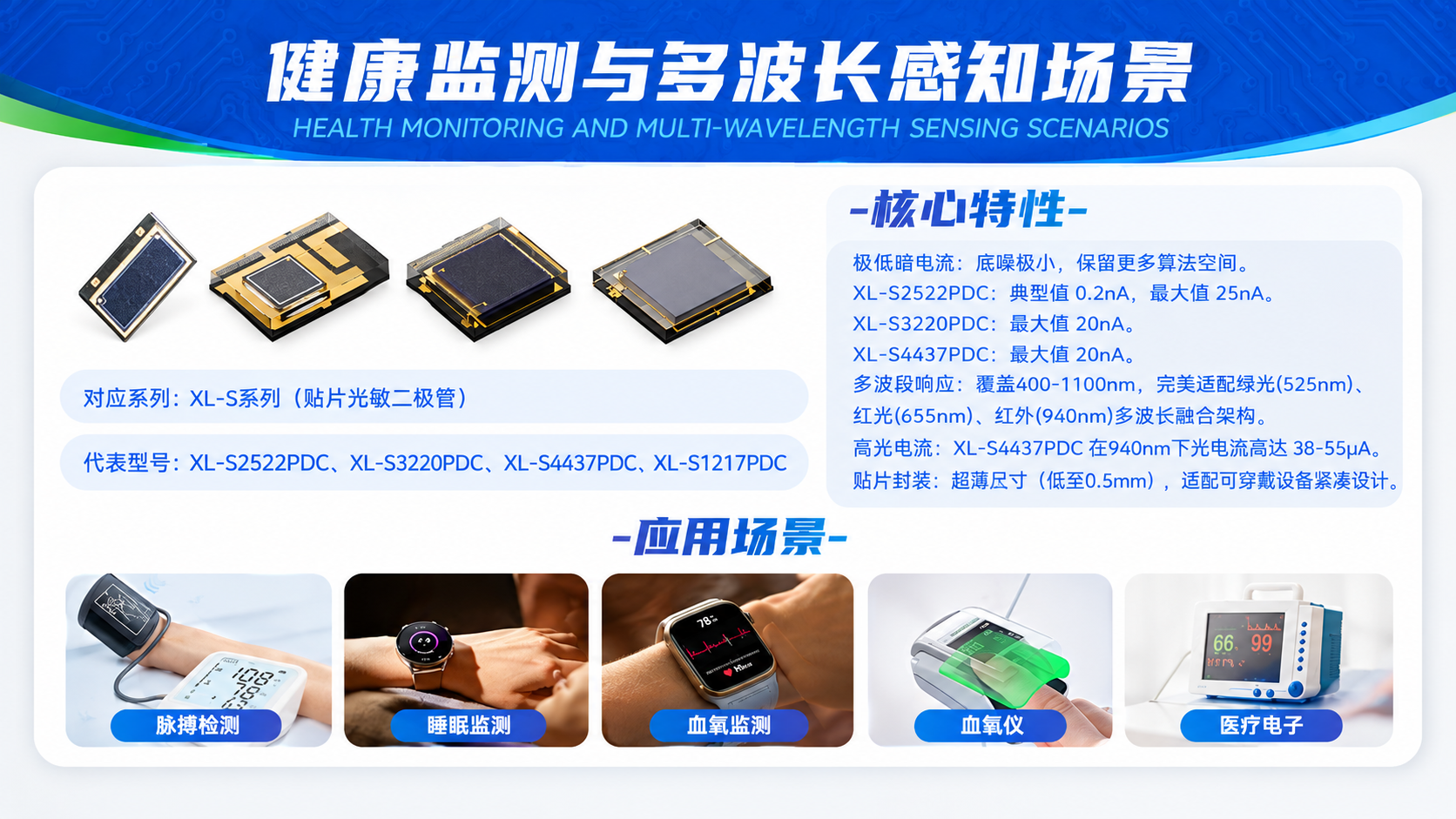
The right wavelength is only the ticket to entry; low enough dark current is what determines whether the waveform is usable. XINGLIGHT’s XL-S series SMD photodiodes provide extremely hardcore specifications for dark-current control:
Ultra-low dark current:
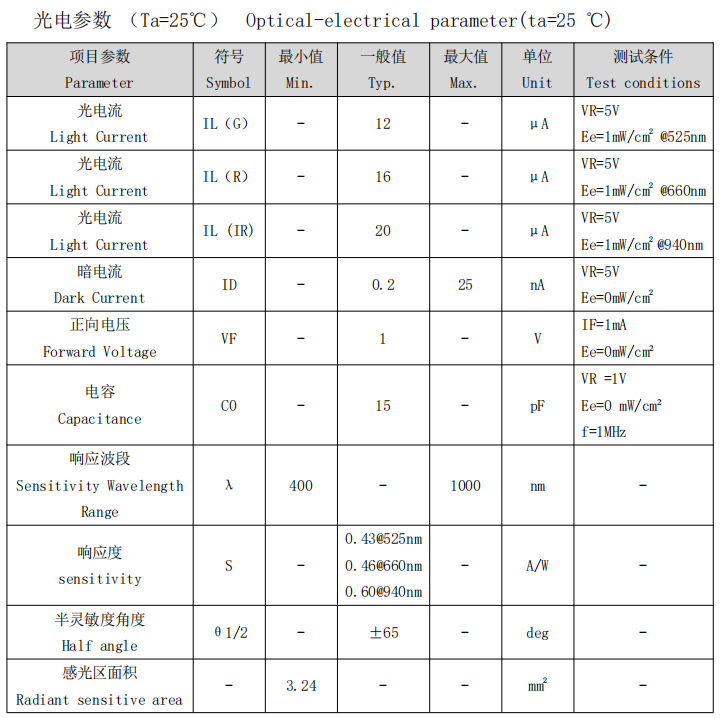
The XL-S2522PDC has a typical dark current as low as 0.2 nA, with a maximum of only 25 nA (VR = 5 V, Ee = 0 mW/cm²).
High consistency:
The maximum dark current of the XL-S3220PDC and XL-S4437PDC is strictly controlled at 20 nA.
Multi-band response:
Taking the XL-S3220PDC as an example, its response band covers 400–1100 nm, and it provides very high photocurrent responsivity at 525 nm (green), 655 nm (red), and 940 nm (infrared).
Mainline 4: Boundary expansion—industrial-grade “non-remote-control” scenarios for infrared devices
Industry developments:
In addition to home appliances and wearables, the infrared communication market in 2026 continues to expand, driven by industrial automation and robotic perception. Cliff detection in robot vacuum cleaners, in-vehicle driver monitoring (DMS), and infrared emitter-receiver pairs in industrial instruments are all seeing new growth.
XINGLIGHT selection solution:
Facing the requirements of industrial and robotic scenarios for mechanical strength and temperature adaptability, conventional small-form-factor packages may be inadequate.
Rugged protection:
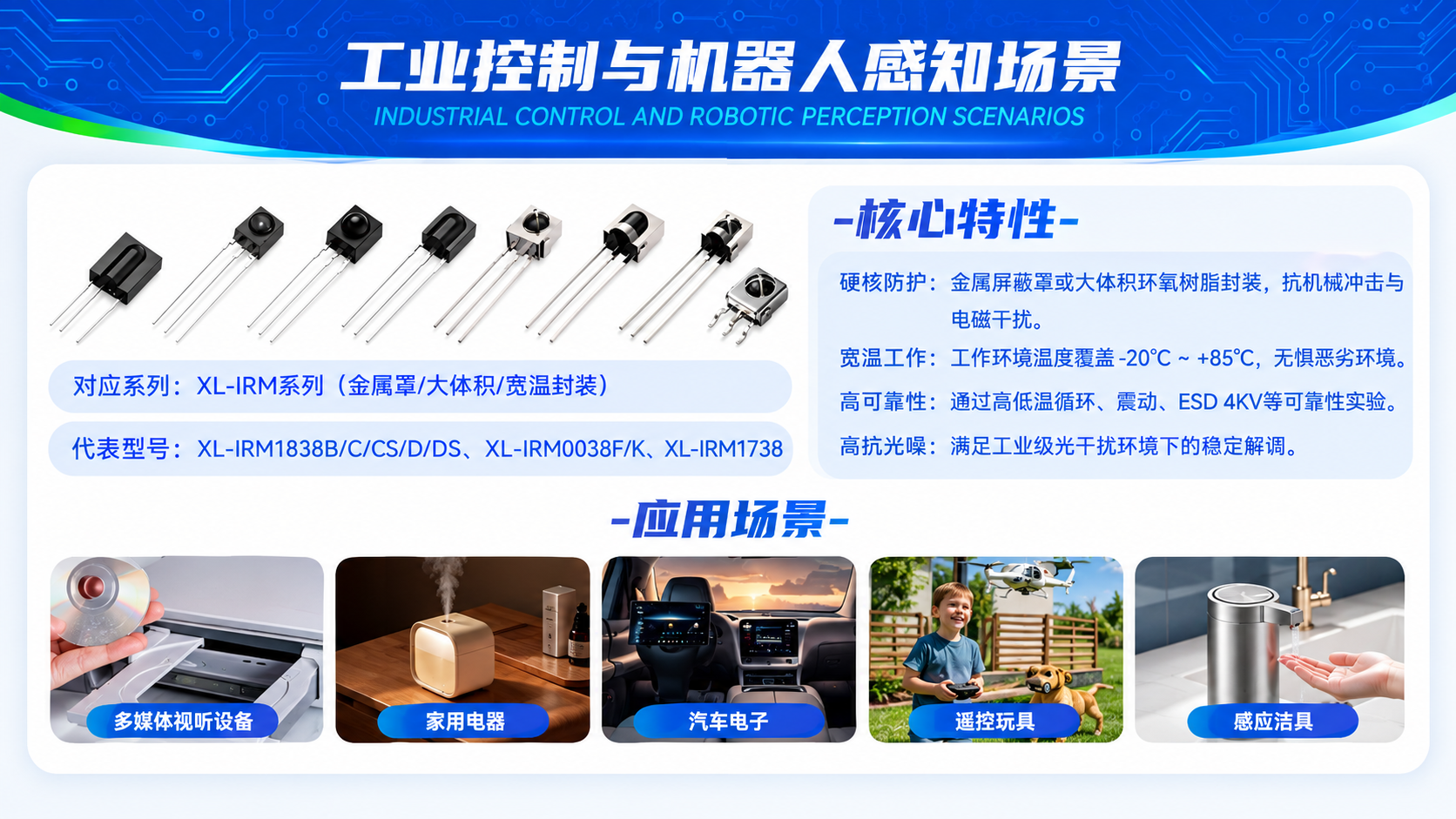
Models such as XINGLIGHT’s XL-IRM1838B / CS / DS use metal shielding or large-volume packaging.
Wide-temperature operation:
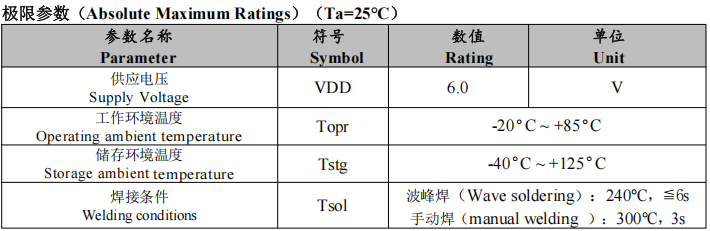
The products’ operating ambient temperature ranges from -20°C to +85°C, allowing them to handle harsh industrial or outdoor environments with ease. They have also passed reliability validations such as vibration testing and high/low-temperature cycling tests, giving hardware engineers greater confidence when selecting components for non-consumer scenarios.
Exclusive for hardware engineers: trend and selection comparison table
To go beyond merely “watching trends,” we have distilled the above industry developments and product parameters into a “trend–pain point–selection” comparison table. We recommend taking a screenshot to save it.
No matter how technical concepts are reinvented, when it comes down to the hardware drawings, the same question ultimately has to be answered: under real extreme conditions, can this device achieve stable demodulation and stable light sensing?
XINGLIGHT’s products make no claim of being “the strongest across the entire lineup.” What they offer is a set of variables that can be checked item by item: wide-voltage range, continuous-code timing, maximum dark current, fluorescent-lamp interference test conditions, wave-soldering temperature, and MSL level.
If you are selecting components for a new project in 2026, or have more specific application requirements for the above parameters, you are welcome to obtain the complete datasheet for the corresponding model at XINGLIGHT’s official website: www.xinglight.cn, or to contact our XINGLIGHT FAE engineer team.